
Cap Soleil Energie has been subject to multiple court rulings for several years. Irregular order forms, inflated energy performance claims, canceled allocated credits: court decisions are piling up against this company specializing in the sale of photovoltaic panels. In 2026, the trend accelerated further with judgments rendered in several French courts and a civil interest order exceeding 750,000 euros in Bobigny.
Irregular order forms: the legal lever that nullifies contracts
Why do so many contracts signed with Cap Soleil Energie end up being annulled by the courts? The answer often lies in a document that many consumers sign without reading carefully: the order form.
The Consumer Code imposes very specific mandatory mentions on this document. The detailed price, the technical characteristics of the equipment, delivery times, the conditions of the right of withdrawal: each missing or poorly formulated element can lead to the nullity of the contract.
In cases involving Cap Soleil Energie, courts have repeatedly noted that these mentions were lacking. In Saumur, the judicial court annulled a contract worth 26,900 euros after finding that the order form did not comply with legal obligations. The company was ordered to refund the entire sale price.
This mechanism has a cascading effect. When the sales contract falls, the allocated credit contract (the loan taken out to finance the installation) also falls. The consumer recovers the amounts paid under the loan, while the credit organization must turn to the seller. Several decisions have thus condemned Cap Soleil Energie and the lending organization jointly, meaning that the consumer can claim all sums from either party.
All elements related to the condemnation of Cap Soleil Energie reveal a recurring pattern in these photovoltaic-related disputes.
Criminal conviction of the leader of Cap Soleil Energie: the CRPC of Bobigny
The prosecutions have not been limited to civil disputes between individuals and the company. The leader of Cap Soleil Energie has been subject to a criminal procedure before the correctional court of Bobigny.
The procedure used was a CRPC, which stands for a plea agreement. In simple terms, the leader agreed to plead guilty in exchange for a sentence proposed by the prosecutor and validated by a judge. This mechanism, sometimes compared to the Anglo-Saxon plea bargain, avoids a lengthy trial but involves an explicit acknowledgment of the alleged facts.
Deceptive business practices were at the heart of the criminal charges. Specifically, the promised energy performances to buyers did not match the reality of the installations. A consumer who signs a contract believing their panels will produce a certain amount of energy, only to find a significantly lower yield, is a victim of deception under the Consumer Code.
The order of September 15, 2025, resulted in severe penalties for the leader. This criminal conviction then paved the way for a major decision on civil interests.
More than 750,000 euros in compensation: the order of July 9, 2026
On July 9, 2026, the correctional court of Bobigny issued an order on civil interests condemning the former leader of Cap Soleil Energie (now Generation Verte) and his companies to compensate nearly fifty consumers.
The total amount exceeds 750,000 euros in compensation. This decision stands out from individual civil judgments due to its scale: it groups dozens of victims into a single procedure, with a joint condemnation of the leader and the structure.
What does this joint liability mean for the affected consumers? In practice, if the company cannot pay (liquidation, insolvency), the victims can turn to the personal assets of the leader. This point changes the game compared to solely condemning the legal entity, which is often insufficient when the company has no remaining assets.
Converging judgments in Saint-Nazaire and Béthune
This order from Bobigny is not an isolated case. During the first half of 2026, several courts issued decisions in the same vein:
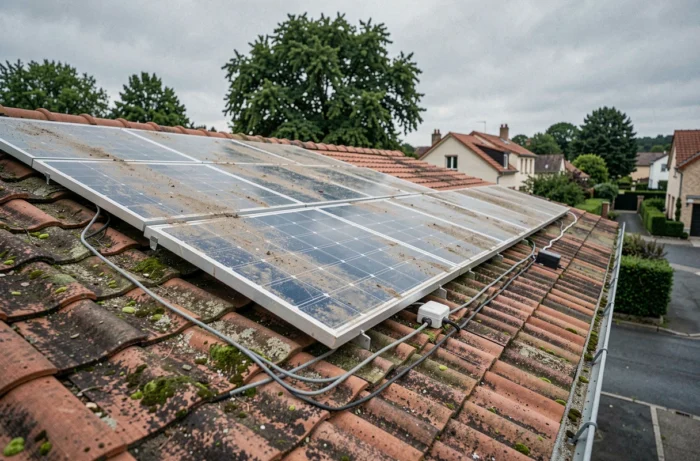
- In Saint-Nazaire, Cap Soleil Energie (under the name Generation Verte) was ordered to refund 27,900 euros, fully remove the panels, and retrieve the equipment installed at consumers’ homes.
- In Béthune, on June 18, 2026, the court ruled in favor of consumers with similar obligations for reimbursement and restoration of roofs.
- In Saumur, the judgment of June 30, 2025, had already set a precedent by acknowledging a judicial admission of the company’s own shortcomings.
This body of case law makes it increasingly difficult for the company to contest the grievances before new courts. Each decision reinforces the next.

Recourse for consumers affected by Cap Soleil Energie
In light of this situation, consumers who signed a contract with Cap Soleil Energie or Generation Verte have several options. The first is to have their order form examined by a lawyer specializing in consumer law. One single formal irregularity is enough to obtain the annulment of the contract.
The second option concerns the allocated credit. If the sales contract is annulled, the loan is automatically annulled as well. The consumer stops repaying the monthly installments and recovers the amounts already paid, subject to returning the borrowed capital to the credit organization, which must in turn seek recourse against the seller.
The third point to remember: the criminal conviction of the leader facilitates civil proceedings. A guilty plea in a CRPC constitutes solid evidence before a civil court. Victims no longer have to prove fault, only their harm.
The change of company name (from Cap Soleil Energie to Generation Verte) does not protect the company. Courts have systematically recognized the legal continuity between the two entities, preventing any escape route through a simple name change.
The decisions rendered in 2025 and 2026 outline a legal landscape where unscrupulous photovoltaic installers face cumulative civil and criminal sanctions that can reach the personal assets of the leaders. For the affected consumers, the window for action remains open as long as the statute of limitations has not expired.