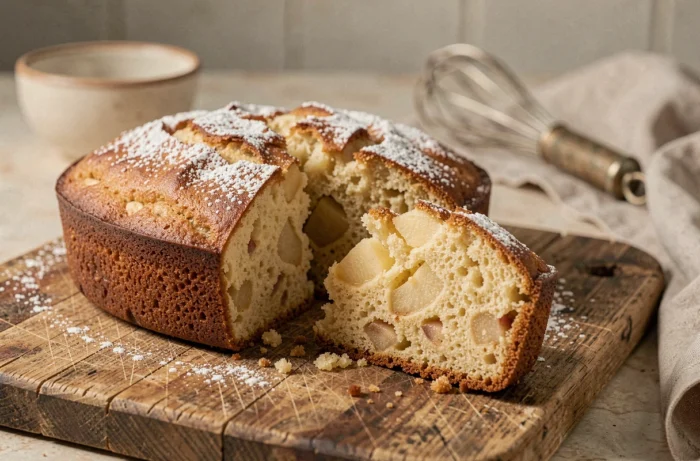
The apple yogurt cake is one of those recipes that everyone thinks they have mastered. The yogurt pot serves as a measuring cup, you mix, you bake, and the result is acceptable. But between an acceptable cake and a moist cake with a melting crumb, there are a few precise gestures that make all the difference. This is precisely what distinguishes the version inspired by Cyril Lignac from a basic recipe.
Adjusting the baking temperature to the type of oven
Have you ever ended up with a yogurt cake that has a too-dry crust while the inside remained moist? The problem often comes from the oven, not the recipe.
In static heat, the batter cooks evenly thanks to the top and bottom heating elements. In convection heat, the air circulates and speeds up the surface browning. The reflex to adopt: lower the temperature by 10 °C in convection heat compared to what the original recipe indicates.
This simple adjustment prevents the surface from caramelizing too quickly while the center remains undercooked. The crumb retains its moistness, and the crust stays thin and golden. It’s a technical nuance that recipe cards rarely mention, but that pastry chefs systematically apply.
To delve into each step of the preparation, Cyril Lignac’s apple yogurt cake details the gestures that make the difference between an amateur result and a chef’s result.
Mixing apple varieties: the sweet-tart balance
Choosing your apples randomly is the most common mistake. Not all varieties react the same way to cooking, and a cake made with a single variety often lacks depth in flavor.
Combining a sweet apple with a tart apple transforms the result. The Golden, sweet and melting, adds natural sugar and a texture that breaks down during cooking. The Reinette or Boskoop, firmer and more acidic, hold their shape and balance the sweetness of the yogurt batter.
This principle of pairing also works with other duos: Gala and Granny Smith, or Fuji and Braeburn. The idea remains the same: one fruit that melts into the batter, another that holds its shape and adds a slight crunch.
The way apples are cut changes the cake’s texture
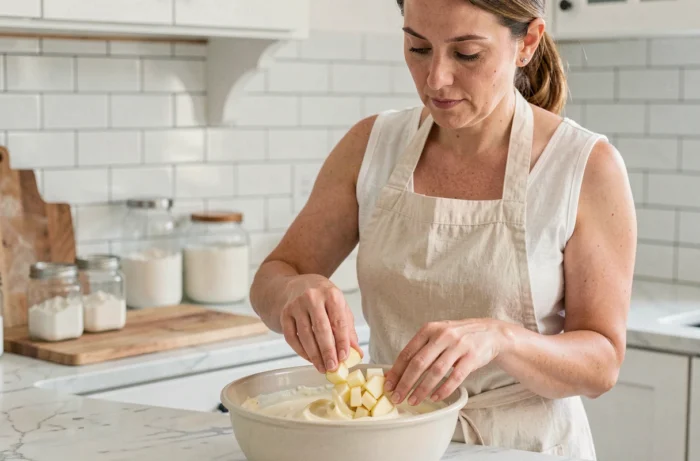
Thick wedges will remain firm and create distinct pockets of fruit within the crumb. Thin slices will almost completely blend into the batter, giving a uniformly moist texture flavored with apple.
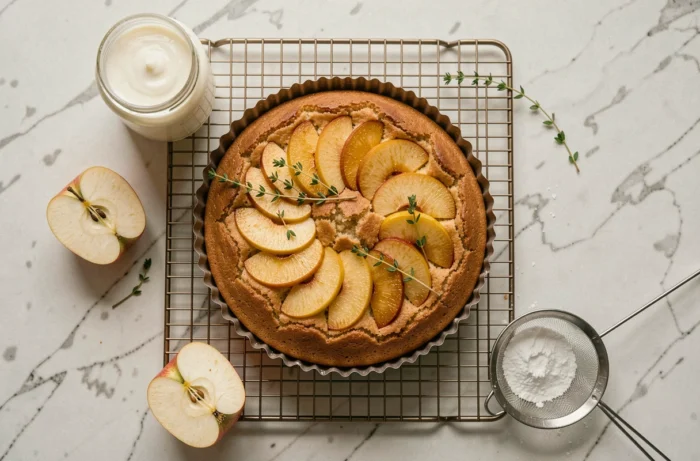
For a result close to that of a chef, combine the two: thin slices mixed into the batter, and a few thicker wedges placed on top before baking. This way, you achieve two textures of apple in the same cake.
The role of yogurt in the batter: why it’s crucial
In a classic cake, butter provides fat and structure. In the yogurt version, it’s the acidity and moisture of the yogurt that work the crumb. The result is lighter, less dense.
Basic plain yogurt works, but Greek yogurt, denser and richer in fat, gives a noticeably creamier batter. Cyril Lignac actually uses this combination of Greek yogurt and softened butter to achieve a batter that is both light and moist.
Softened butter and yogurt: two complementary fats
Softened butter (brought to room temperature, never melted) is incorporated with sugar to create tiny air bubbles. This is called creaming. The Greek yogurt, added afterward, brings moisture without weighing down this airy structure.
Melting the butter in the microwave to save time destroys this aeration. The cake will be denser and flatter. Taking the time to properly work a correctly softened butter is one of the gestures that separates an average result from a pastry chef’s result.
Flavoring the batter: vanilla, cinnamon, and beyond
Vanilla pulp remains the base flavor for this cake. A split and scraped pod brings an incomparably rounder flavor than an industrial liquid aroma. If you don’t have a pod, a quality vanilla extract (with visible seeds) is a good compromise.
Cinnamon and ginger pair well with apple. The apple wedges can be coated with these spices before being browned in a pan with a bit of butter and cane sugar. This quick pre-cooking caramelizes the surface of the fruit and concentrates the flavors even before baking.
Be careful not to over-spice: half a teaspoon of cinnamon and a pinch of ginger are enough for a cake meant for four people. Beyond that, the spices mask the taste of the apple instead of supporting it.
Checklist of gestures that make a difference
A few checkpoints to verify before baking your apple yogurt cake:
- The butter is softened at room temperature (not melted), creamed with the sugar until a pale, fluffy mixture is obtained
- The oven is preheated for at least fifteen minutes in advance, and the temperature is reduced by 10 °C if using convection heat
- The apples combine at least two varieties (one sweet, one tart) to create contrast in flavor
- Baking powder is added last, sifted with the flour, for even distribution and consistent rising
- The batter is not overworked after adding the flour: mix until incorporated, no more
This last point deserves an explanation. Overmixing the batter after adding the flour activates the gluten, making the cake rubbery. A few movements with a spatula are enough. Stop mixing as soon as the flour disappears.
The apple yogurt cake remains an accessible recipe, but these technical adjustments, from the oven temperature to the choice of apple varieties, transform an everyday dessert into a mastered pastry. The last reliable test before unmolding: the blade of a knife inserted in the center should come out with a few moist crumbs attached, never completely dry.