
A cervical smear rarely lasts more than a few minutes. The discomfort often stems less from the examination itself than from the lack of guidance on what to do beforehand. Knowing how to prepare your body and your appointment changes the perception of this moment: less uncertainty, less tension.
Intravaginal products and smears: what can distort the sample
Before thinking about stress or what to wear, there is a technical point that many patients discover too late. Certain products used in the days leading up to the smear can alter the quality of the sample taken from the cervix.
Suppositories, vaginal creams, lubricating gels, vaginal douches, and tampons modify the local flora or leave a film on the cervical cells. The laboratory analyzing the sample may then obtain an uninterpretable result, necessitating a repeat examination.
Stop all intravaginal products 48 to 72 hours before the appointment. This advice also applies to spermicides and antifungal suppositories being used. If you are undergoing a local treatment prescribed by your doctor, mention it when making the appointment to adjust the schedule.
To properly prepare for a medical smear, this precaution regarding intravaginal products remains the most critical from a technical standpoint, well before any comfort considerations.
Choosing the right time in the cycle for a reliable smear
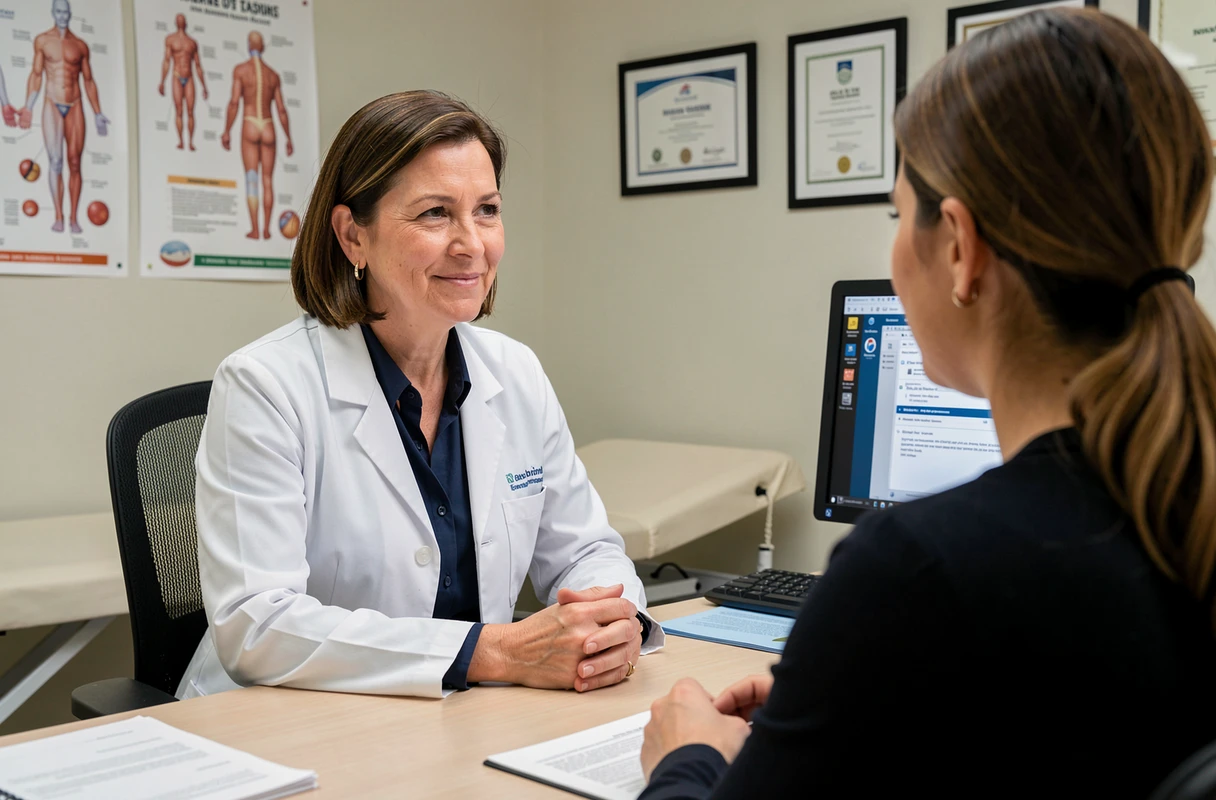
You may have noticed that certain time slots for gynecological appointments are discouraged depending on the time in the cycle? This is not an organizational whim. The smear should be done outside of menstruation, ideally in the middle of the cycle.
During menstruation, blood mixed with the collected cells makes laboratory analysis much more difficult. The cervical cells are less readable, and the risk of having to repeat the examination increases.
Specifically, aim for a window a few days after your period ends. If your cycle is irregular, inform the office when making the appointment. The practitioner can guide you to a suitable time slot.
This calendar detail also has an indirect effect on stress: a sample taken under good conditions yields a usable result on the first attempt, which avoids the waiting and anxiety of a second visit.
Preparing a reference sheet before the gynecological consultation
On the day of the appointment, the practitioner asks quick questions before starting the examination. Having the answers ready speeds up the consultation and provides a sense of control that reduces tension.
Note the date of your last period, your history of smears (normal or abnormal results), any previous HPV screenings, and ongoing treatments (including contraception) before the appointment. This information guides the practitioner and allows them to adjust their approach if necessary.
A simple note on your phone is enough. This reference sheet transforms a moment where you are subjected to questions into an exchange where you actively participate.
- Date of last period and cycle regularity
- Results of previous smears or colposcopies, even old ones
- Current local or general treatments (suppositories, antibiotics, hormonal contraception)
- History of HPV infection or cervical lesions
Reducing smear stress: concrete levers that work
The discomfort related to the smear is rarely physical in the strict sense. The examination lasts a few minutes, the sample itself only a few seconds. The main discomfort is psychological: feelings of vulnerability, loss of control, negative anticipation.
The most effective strategies are those that restore control to the patient. You can agree on a word or gesture with the practitioner to request a pause at any time. This simple agreement made before the examination changes the dynamic: you are no longer passive; you participate in the process.
Clothing and positioning
Wear clothes that are easy to remove and in which you feel comfortable. A skirt or long dress allows you to only remove your underwear, which reduces the feeling of exposure. This advice may seem trivial, but it significantly changes the experience of the examination for many women.
Breathing and muscle tension management
During the insertion of the speculum, focus on a slow, prolonged exhalation. Breathing out reflexively relaxes the perineal muscles, which facilitates the practitioner’s action and decreases the sensation of pressure.
Arriving a few minutes early rather than in a rush also helps. The nervous system needs a short adjustment period to the place and situation before it can calm down.
Smears and cervical cancer screening: understanding what we are looking for
The cervical smear is a screening examination, not a diagnosis. It detects cellular abnormalities on the cervix, often caused by the human papillomavirus (HPV). The majority of HPV infections resolve spontaneously, without treatment, within a few months to a few years.
When the virus persists, it can cause cellular changes known as precancerous lesions. Detected early through the smear, these lesions can be treated before any progression to cancer. It is precisely this early detection that makes regular screening so valuable.
An abnormal smear result does not mean cancer. It triggers close monitoring or additional examinations (colposcopy, HPV test). Understanding this distinction before the appointment alleviates a significant portion of the anxiety related to the results.
- Normal smear: the collected cells show no abnormalities, follow-up according to the usual schedule
- Abnormal smear: presence of altered cells, additional examinations prescribed to clarify the situation
- Positive HPV test: the virus is present, but this does not imply lesions; appropriate monitoring is established
A well-prepared smear yields a reliable result on the first attempt. Stopping intravaginal products, scheduling appointments outside of menstruation, having a reference sheet on your phone, wearing comfortable clothing, and slow exhalation during the examination: these five practical tips are enough to transform a dreaded moment into a controlled consultation.