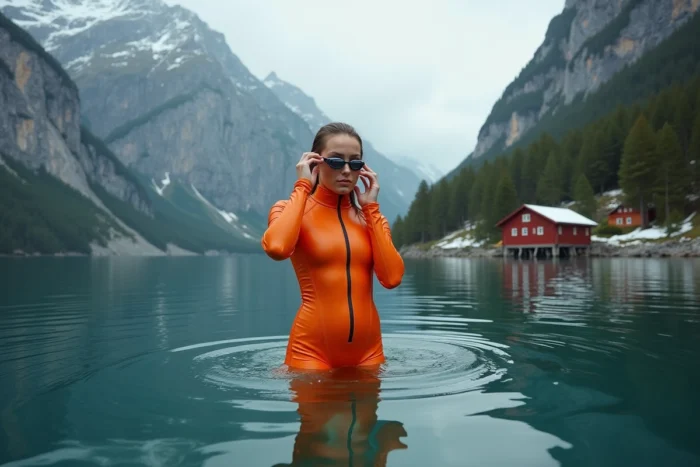
The water temperature in a Norwegian fjord can vary by several degrees between two coves just a few kilometers apart. This variability, linked to depth, the influx of glacial freshwater, and solar exposure, makes each swim in the fjord different. Understanding these parameters before entering the water helps avoid thermal shock and allows for one of the most spectacular swimming experiences in nature in Europe.
Fjord Temperatures in Summer: Differences That Change Everything
The surface temperature of a fjord depends on three main factors: latitude, the depth of the arm of the sea, and the amount of freshwater from snowmelt or glaciers. These parameters create marked differences from one fjord to another, even in the height of summer.
| Area | Swimming Season | Typical Surface Temperature (Summer) | Particularity |
|---|---|---|---|
| Oslofjord (southeast) | June to August | Can approach 20 °C during heat waves | Less salty waters, possible Vibrio bacteria alerts |
| Fjords of the West Coast (Sognefjord, Hardangerfjord) | July to mid-August | Significantly cooler, variable depending on glacial input | Cold freshwater layers on the surface near waterfalls |
| North Fjords (Tromsø, Lofoten) | July (midnight sun) | Rarely above 15 °C | Continuous light, but cold water requiring acclimatization |
The Oslofjord is notable for summer temperatures that can rise enough for Vibrio and Shewanella bacteria to proliferate. Norwegian health authorities now issue regular alerts on this topic, especially for swimmers with open wounds.
In contrast, in the glacier-fed fjords of the west coast, the temperature can drop sharply just a few meters from a sunny dock. For those wishing to swim in the fjords of Norway without unpleasant surprises, checking the local temperature before immersion makes all the difference.

Thermal Shock in Cold Water: The Real Danger of Norwegian Fjords
The main risk when swimming in a fjord is not the current or marine life. It is the thermal shock associated with immersion in cold water. When the body suddenly transitions from ambient temperature to significantly colder water, the gasping reflex is triggered: involuntary inhalation, hyperventilation, panic.
This mechanism explains the majority of drownings in cold open waters, even among experienced swimmers. The first minutes in the water are the most critical.
Gradual Acclimatization Before Immersion
Entering the water gradually reduces the risk. Wetting the neck, wrists, and torso before fully immersing allows the body to initiate vasoconstriction without triggering a violent respiratory reflex.
- Spend several minutes splashing water on the upper body before entering the water up to the waist
- Limit the first immersion to a few minutes if the temperature is below 15 °C
- Never dive directly from a dock or rock without wetting beforehand
- Exit immediately in case of uncontrollable shivering or difficulty coordinating movements
The duration of swimming should remain short in cold water, even if the sensation of cold diminishes after a few minutes. This apparent acclimatization masks a continuous drop in body temperature.
Yr App and Local Monitoring: Tools to Check Before Swimming
The Yr app, managed by the Norwegian Meteorological Institute and NRK, offers a continuously updated water temperature map for beaches, lakes, and coastal areas of the country. Searching for a fjord or beach by name displays the measured surface temperature, allowing for adjustments to equipment and immersion duration.
This tool is widely used by Norwegians themselves. Additionally, coastal municipalities sometimes publish local health advisories, particularly in the Oslofjord when bacterial concentrations exceed recommended thresholds.

Currents and Fjord Configuration
Fjords are deep arms of the sea, often enclosed. The circulation of water between the surface and the bottom creates currents that are not always visible. Near the mouths, tidal currents can be significantly stronger than at the bottom of the fjord, where the water appears calm.
Favoring swimming areas identified by municipalities (often marked by a sign or dock) limits this risk. Developed beaches at the back of the fjord generally offer the safest conditions for families and casual swimmers.
Swimming in a Fjord with Children: Specific Precautions
Children lose body heat faster than adults due to their surface-to-body mass ratio. In cold water, this heat loss accelerates. A swim of just a few minutes can lead to mild hypothermia in a child, even if they do not complain of the cold.
The most suitable swimming areas are shallow, sun-exposed coves located at the back of the fjord. The water there is slightly warmer due to solar heating at shallow depths. Having a thick towel and dry clothes readily available remains a basic reflex.
Monitoring for signs of cooling (blue lips, shivering, slowed behavior) rather than relying on the child’s verbal statements is the best approach. A child in mild hypothermia may not always realize they are cold.
Equipment and Preparation for Swimming in a Fjord
A short or full wetsuit is not a gimmick in Norwegian fjords. Neoprene extends safe swimming duration and reduces initial thermal shock.
- Wetsuit (thickness suited to local temperature) for immersions longer than a few minutes
- Neoprene swim cap to limit heat loss from the head
- Open water swim buoy to remain visible to boats navigating the fjord
The right to access nature (allemannsretten) allows swimming in Norwegian fjords and lakes, including on unfenced private land, provided the locations are respected. This freedom of access does not exempt one from checking local conditions before each swim.
Swimming in a fjord remains an accessible activity as long as cold water is treated as a technical parameter and not just a temporary discomfort. Consulting Yr, entering gradually, limiting duration, and monitoring body signals are the foundation of any successful immersion in Norwegian waters.